How research-led design doubled supply from key customer segments
The most impactful thing we did for Newsflare's highest-value contributors wasn't redesigning the upload experience. It was eliminating the need to upload at all. For everyone else, we consolidated five fragmented flows into one.
- Role
- Product and design lead
- Collaborators
- Engineering, Video Desk, Sales, Support
- When
- Q2 2022, Newsflare (a user-generated video marketplace)
- Results
-
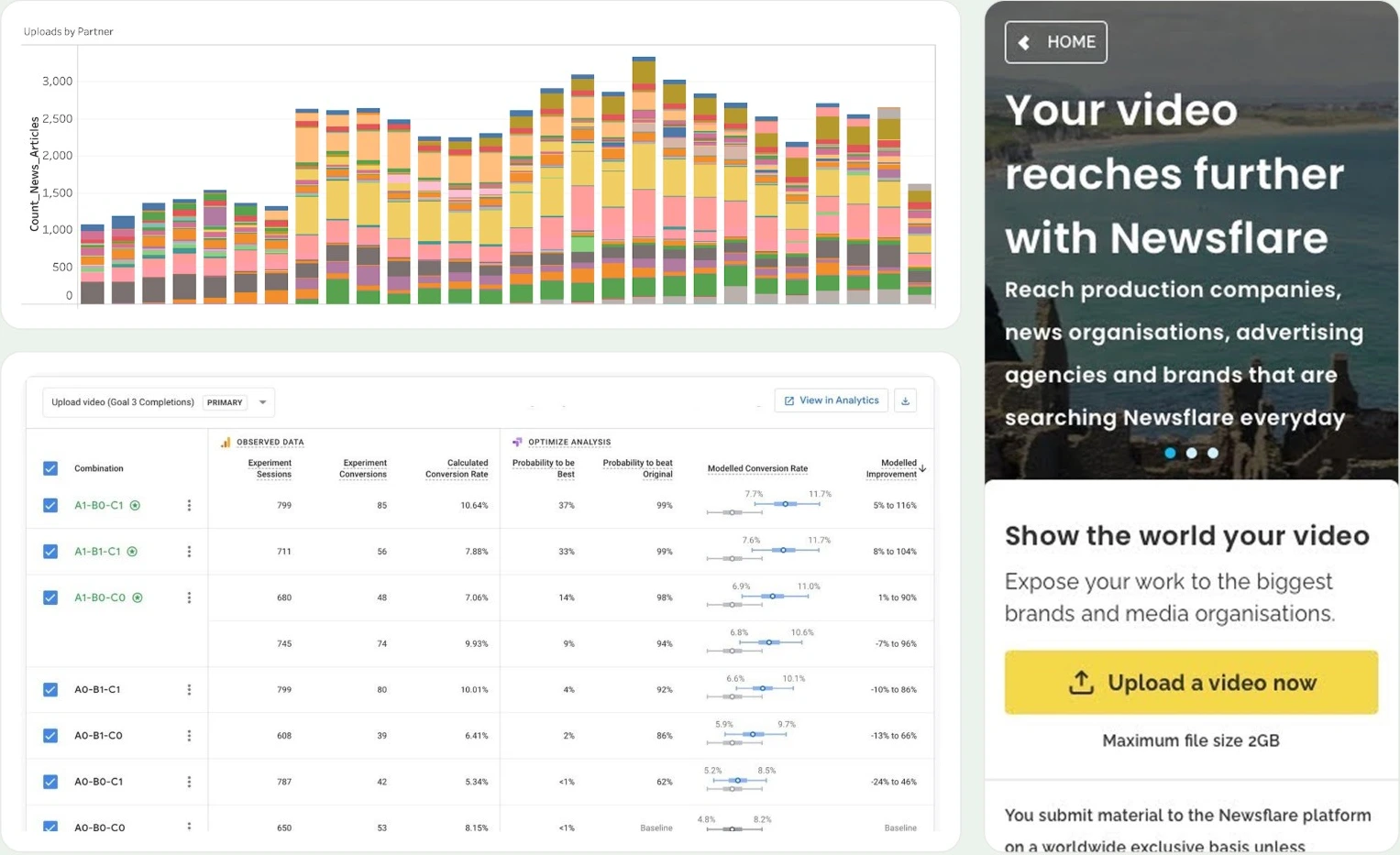
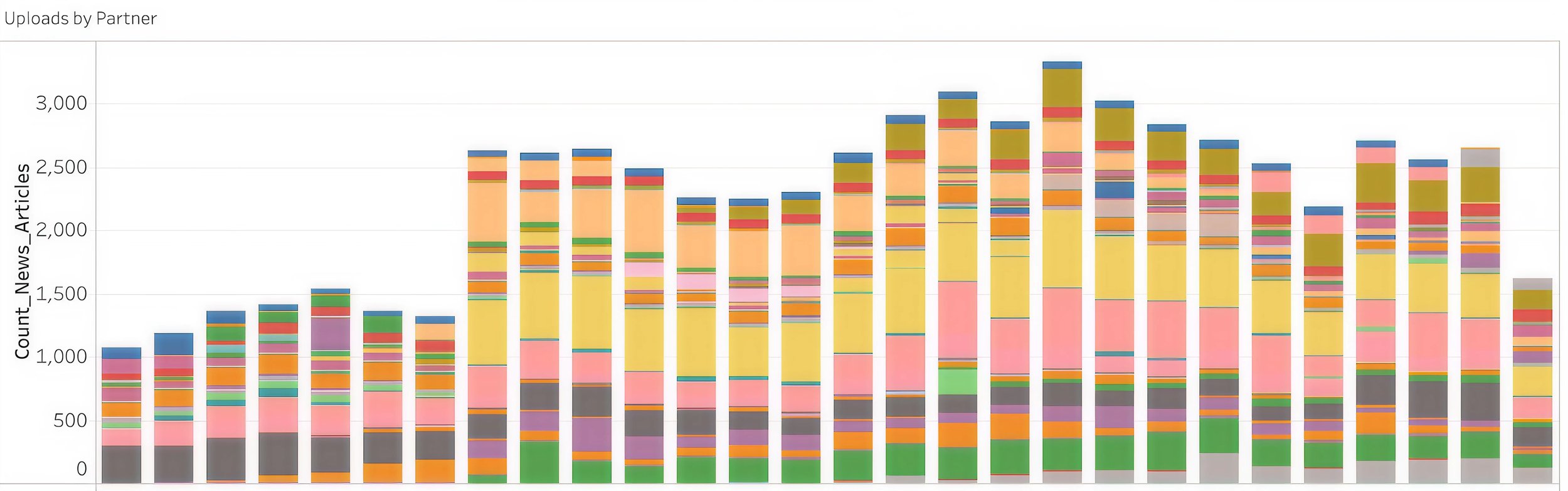
- More than 200% more uploads from Content Partners, from a one-time setup
- +50% uploads from Chasers, the segment producing around 65–70% of saleable video
- Five upload journeys consolidated into one
- Key decision
- We built separate solutions for different segments instead of one better upload flow, including an automated feed import that meant the highest-volume partners never had to upload at all.
Context
Newsflare is a video marketplace connecting videographers and members of the public to media buyers across news, entertainment, and advertising. At the time I was both Product and Design Lead, working across design, engineering, customer-facing teams, and senior leadership.
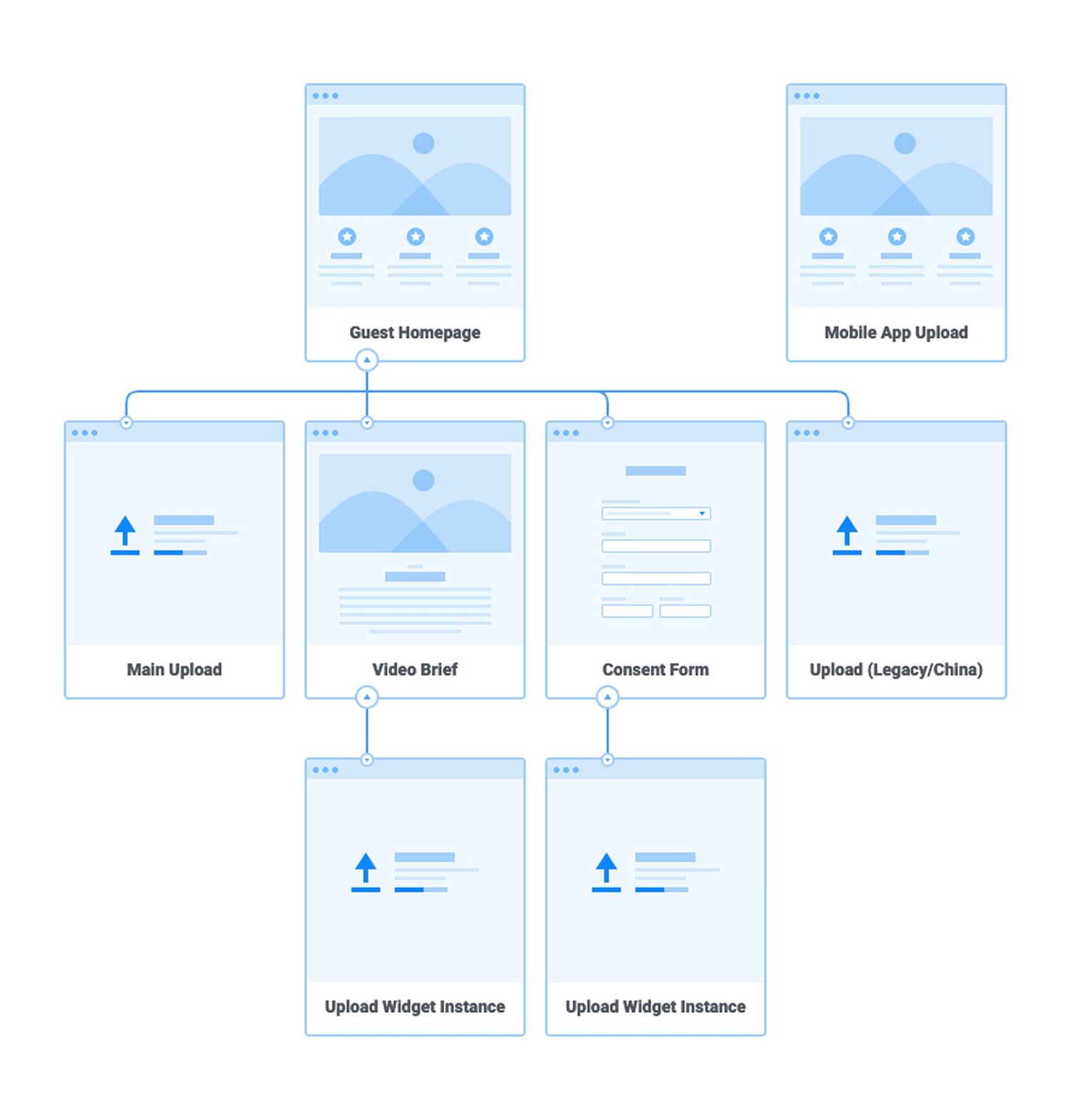
Buyer demand was strong. The supply side wasn't keeping up - particularly for a small number of high-value contributors joining at a growing rate. Five separate upload flows existed within the portal, generating inconsistency and significant technical debt.
The problem
Five separate upload flows generated inconsistency and compounding tech debt. 90% of uploads came from mobile but the experience was desktop-first. Contributors had no visibility into what happened after they uploaded. Many described it as throwing videos into a black hole. And Newsflare had never formally defined its core contributor segments or how their needs differed.
Research and segmentation
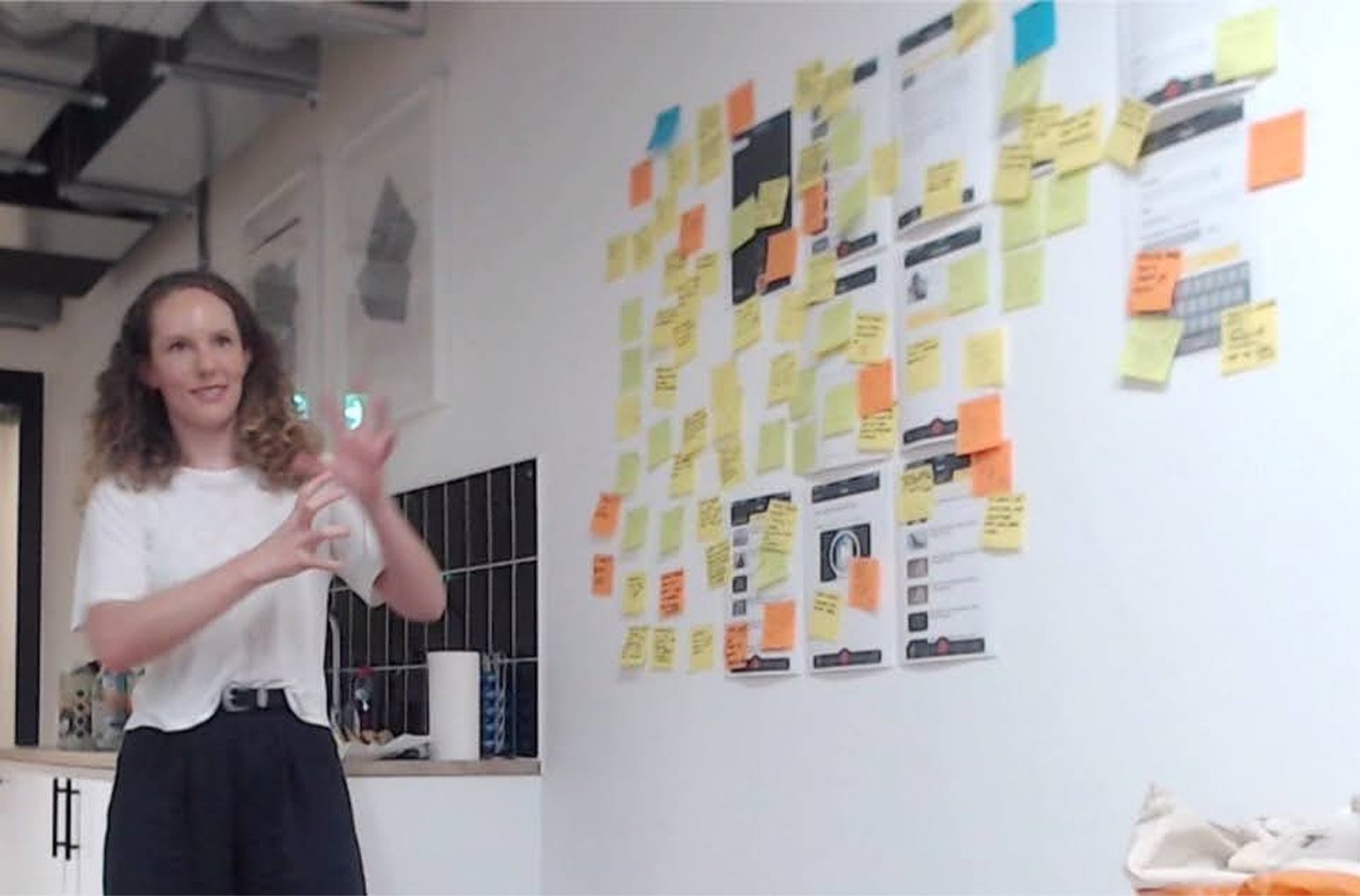
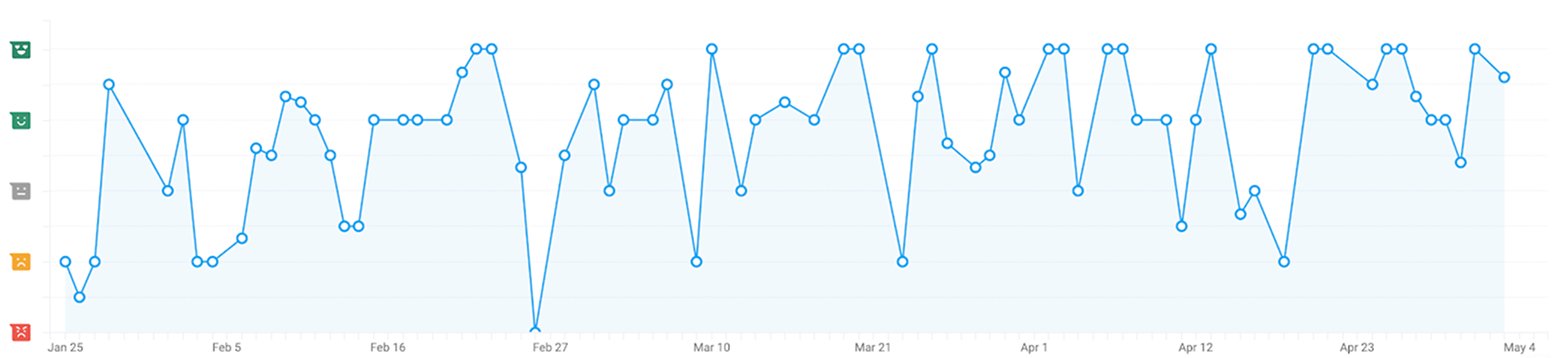
I spoke directly with users through interviews, focus groups, surveys, and contextualised their attitudes through platform analytics and sales rate data. A research session with contributors was used to surface attitudes about the platform, identify pain points, and gather sentiment around the upload experience.
Four filmer archetypes emerged from the research:
- Chancers - opportunistic earnings, low upload volume
- Chasers - reliable income, high upload volume
- Creators - audience and platform growth, moderate volume
- Content Partners - sales and syndication, very high volume
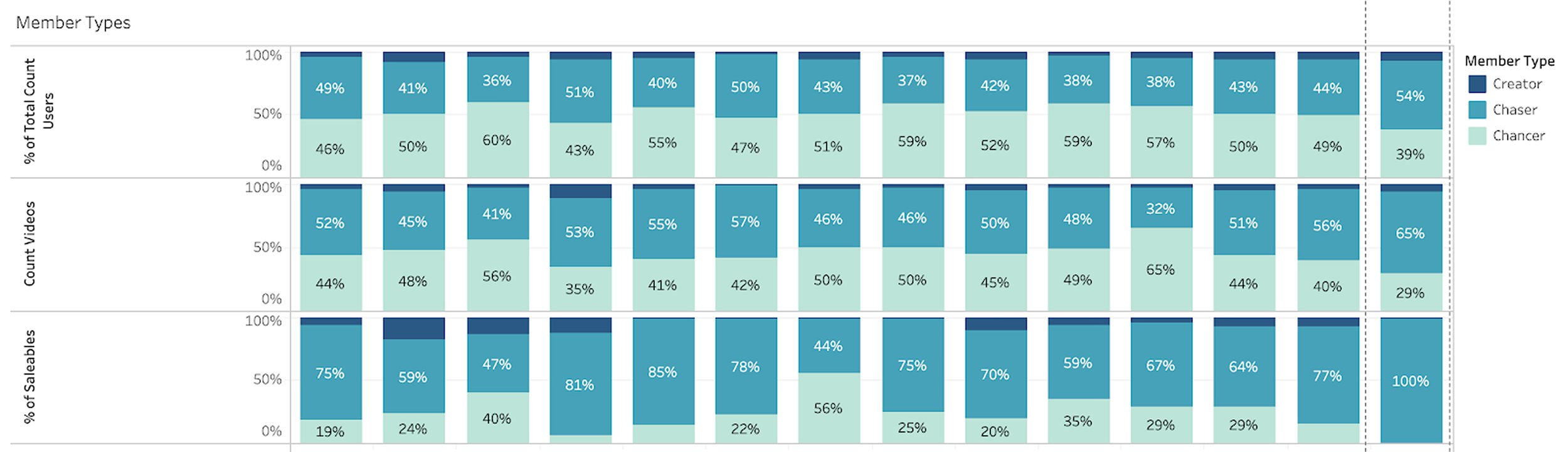
A product-market fit survey across each segment found two groups breaching the 40% threshold: Chasers and Content Partners. Chasers produced roughly 65–70% of all saleable video. Content Partners contributed the overwhelming majority of the remainder.
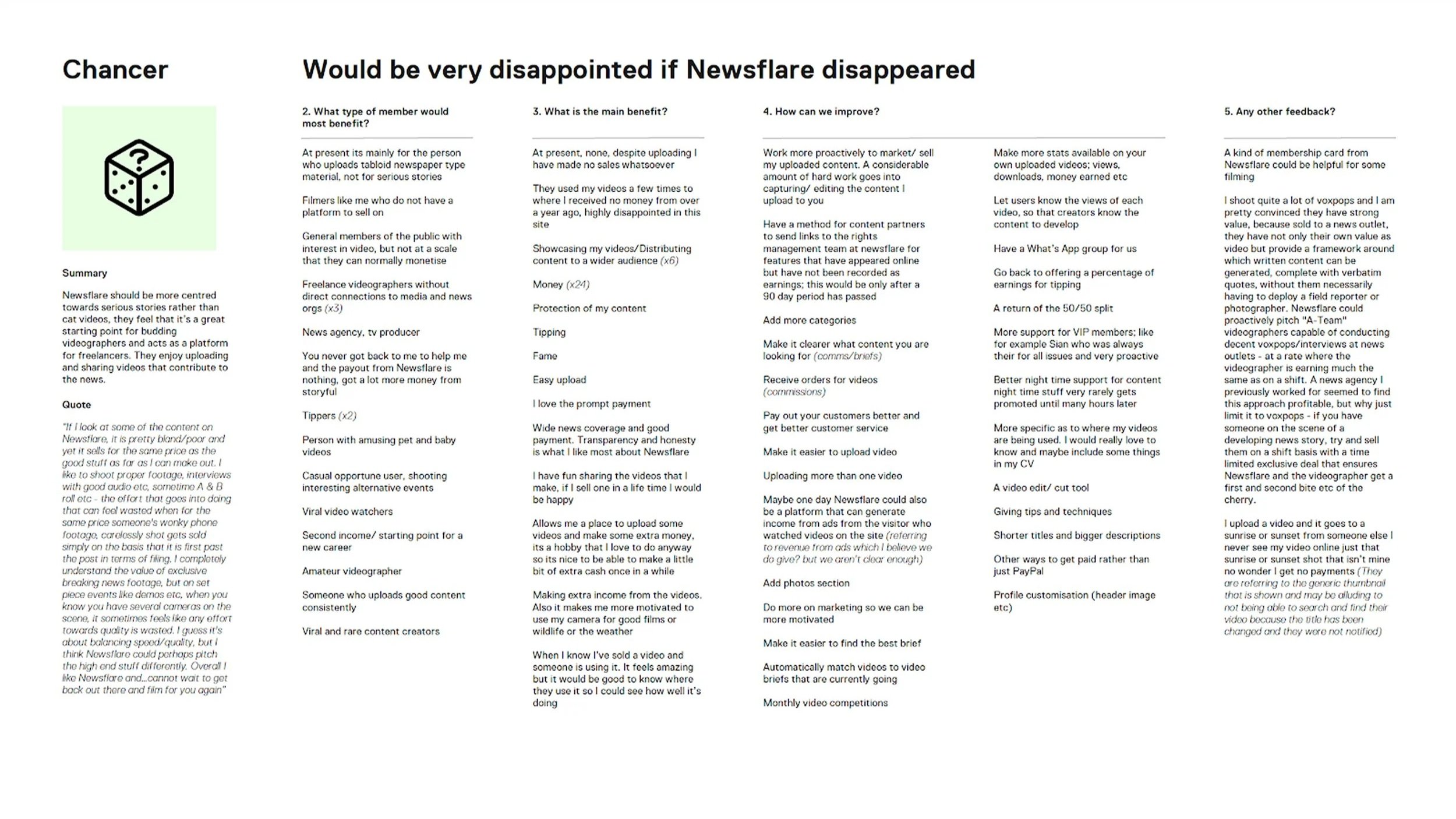
Many Chasers and Content Partners were filming significantly more footage than they uploaded - submitting only what they thought would sell. Because the upload process was effortful, they were leaving money on the table. Until the perceived cost of supplying a video dropped, supply would remain constrained.
"I like to shoot proper footage, interviews with good audio, sometimes A and B roll. The effort that goes into that can feel wasted when, for the same price, someone's wonky phone footage that's carelessly shot gets sold simply because it's first past the post."
Newsflare Chaser, user interview
Solution - Content Partners: MRSS pipeline
Through deeper conversations with Content Partners, I discovered many hosted video on private systems that generated MRSS feeds: structured data files that could be scraped automatically to import entire video libraries without any manual upload from the partner. Working closely with engineering and a key Content Partner, I built a proof-of-concept that did exactly that - a first for the company.
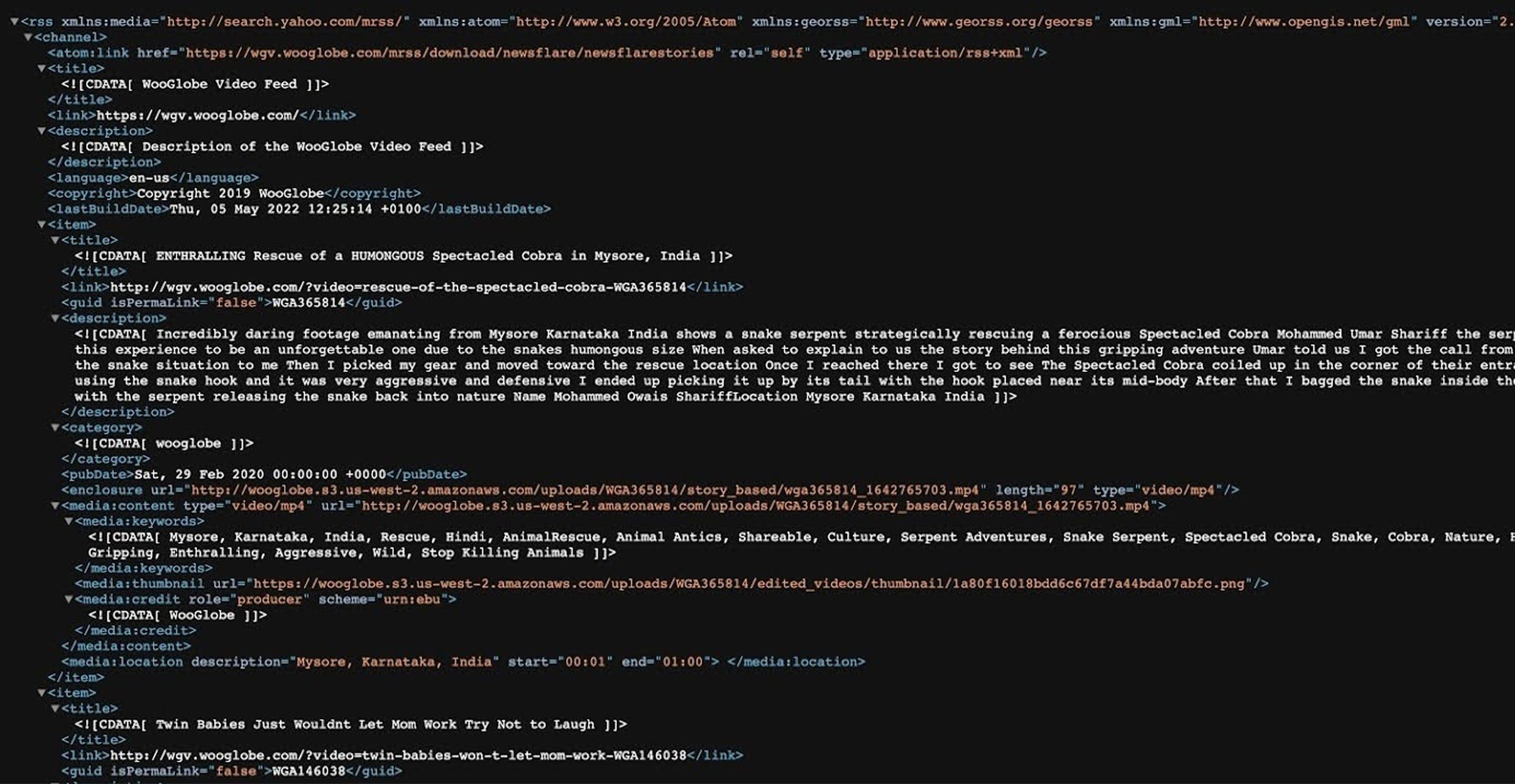
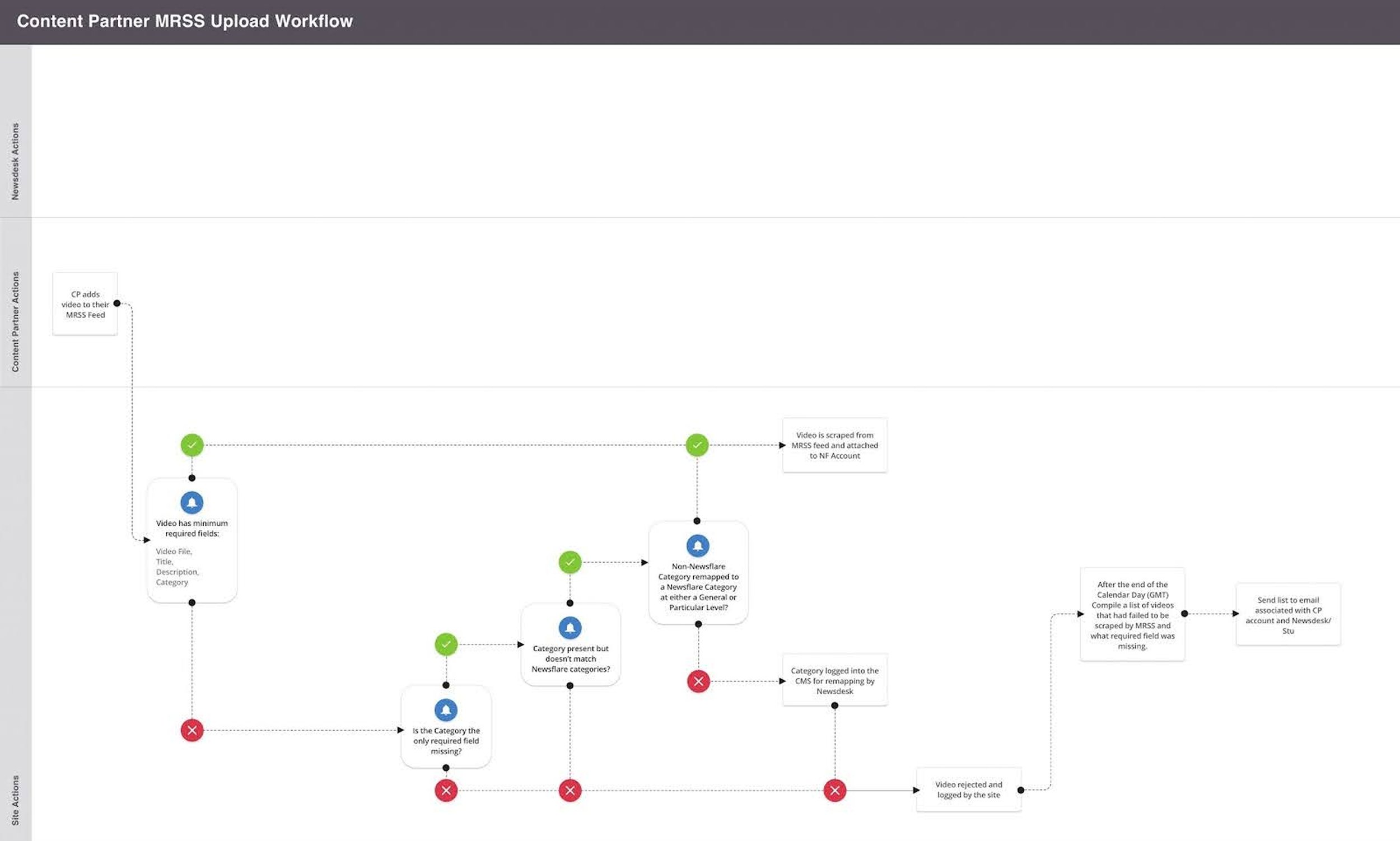
The result: a near-doubling of video received from Content Partners overnight, from a one-time setup. The architecture was then scaled to all similar partners.
Solution - Chasers: consolidated upload flow
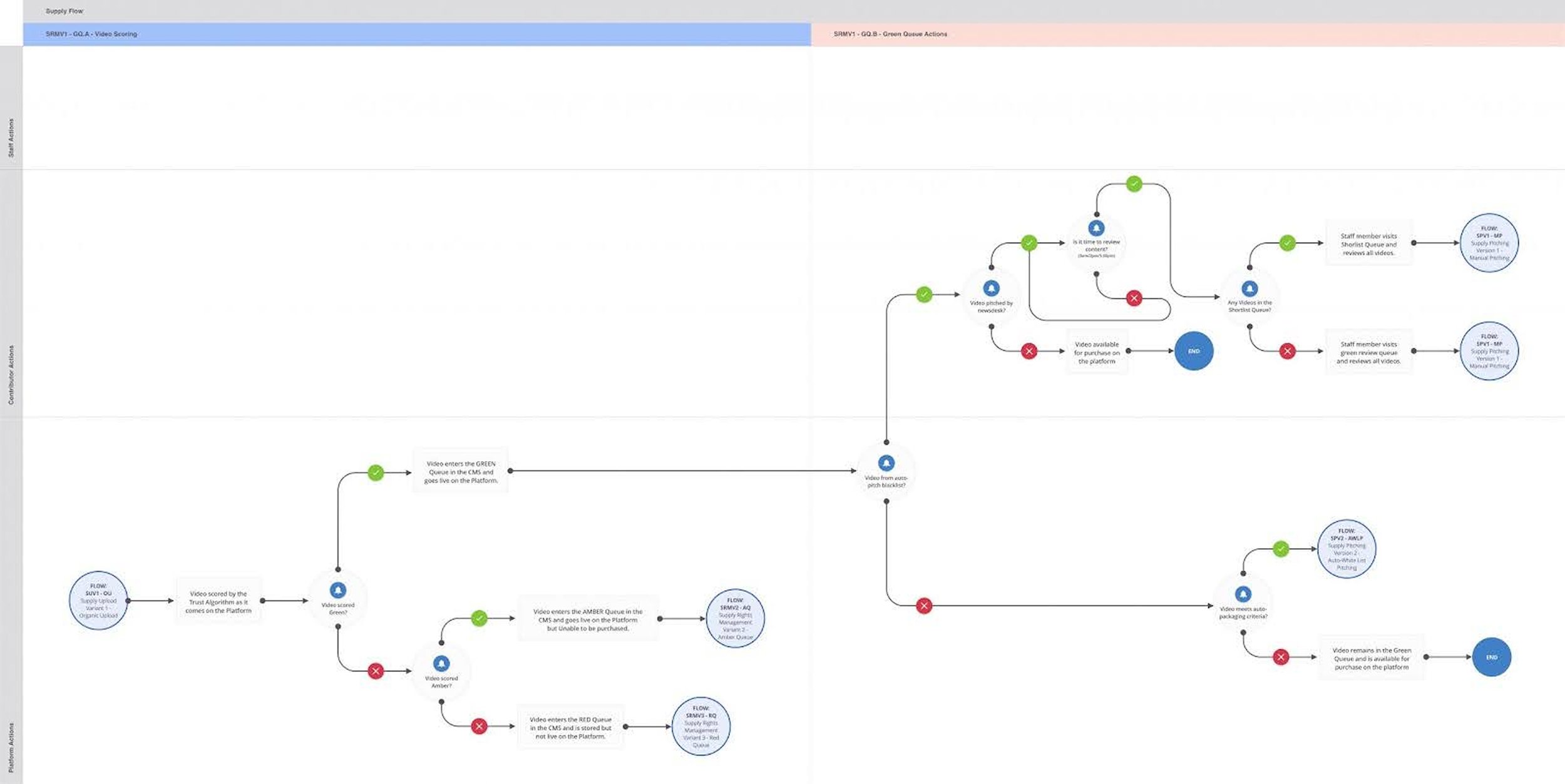
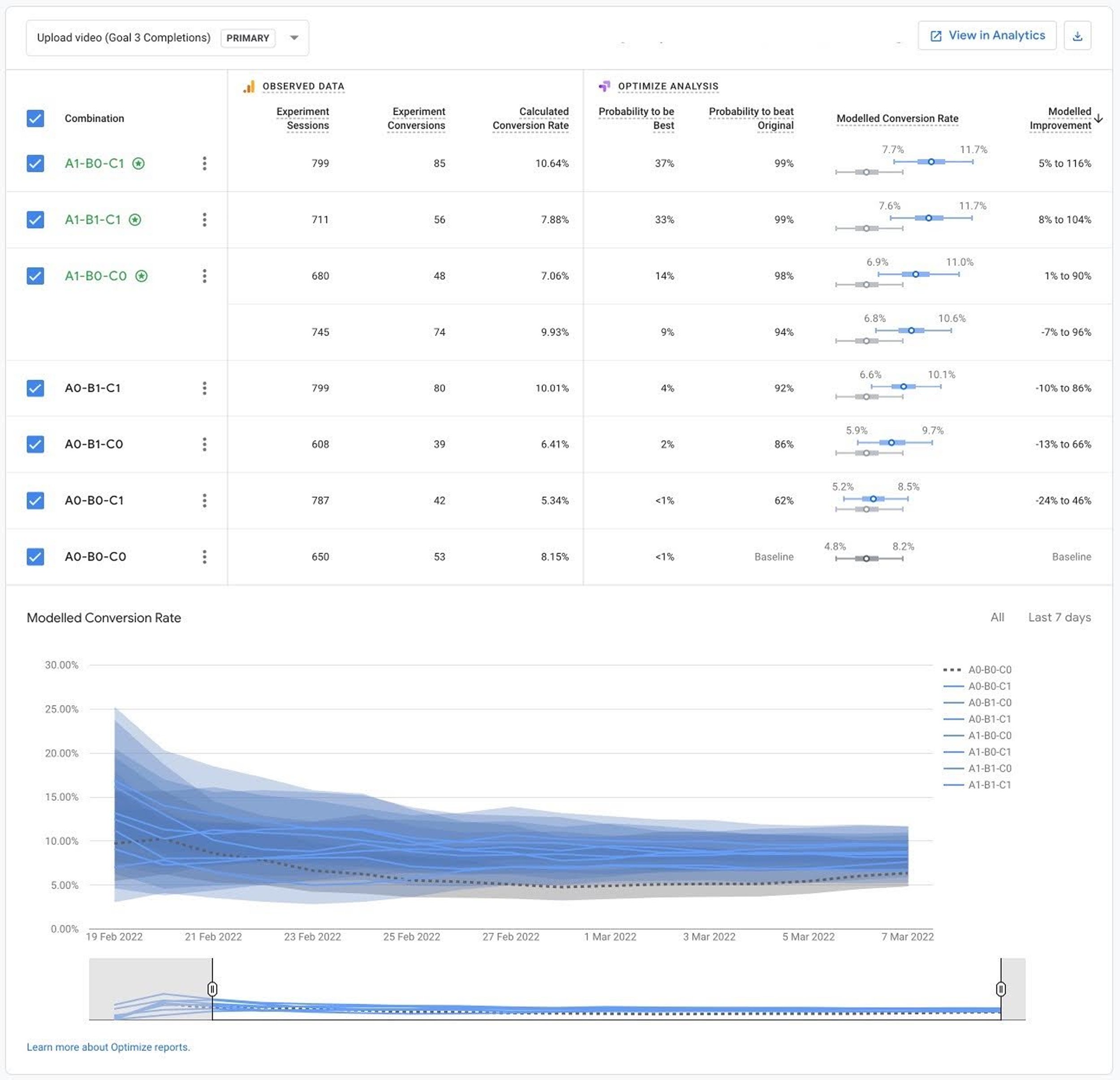
With the MRSS pipeline underway, I mapped all five existing upload journeys, identified opportunities to redirect users toward a single core funnel, and eliminated duplication. A series of A/B tests on the consolidated flow informed the final design direction.
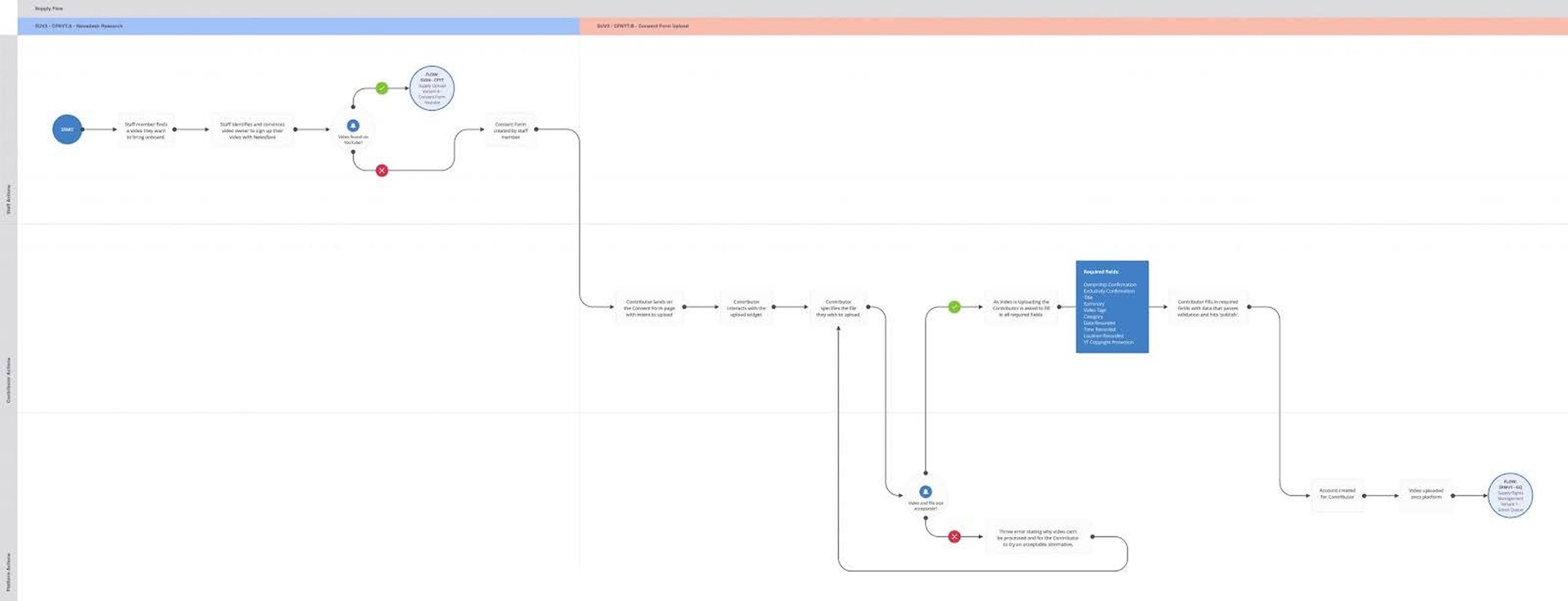
The redesigned upload experience was built mobile-first: chunked inputs, removed non-critical fields, and clear progress states bookending the journey.

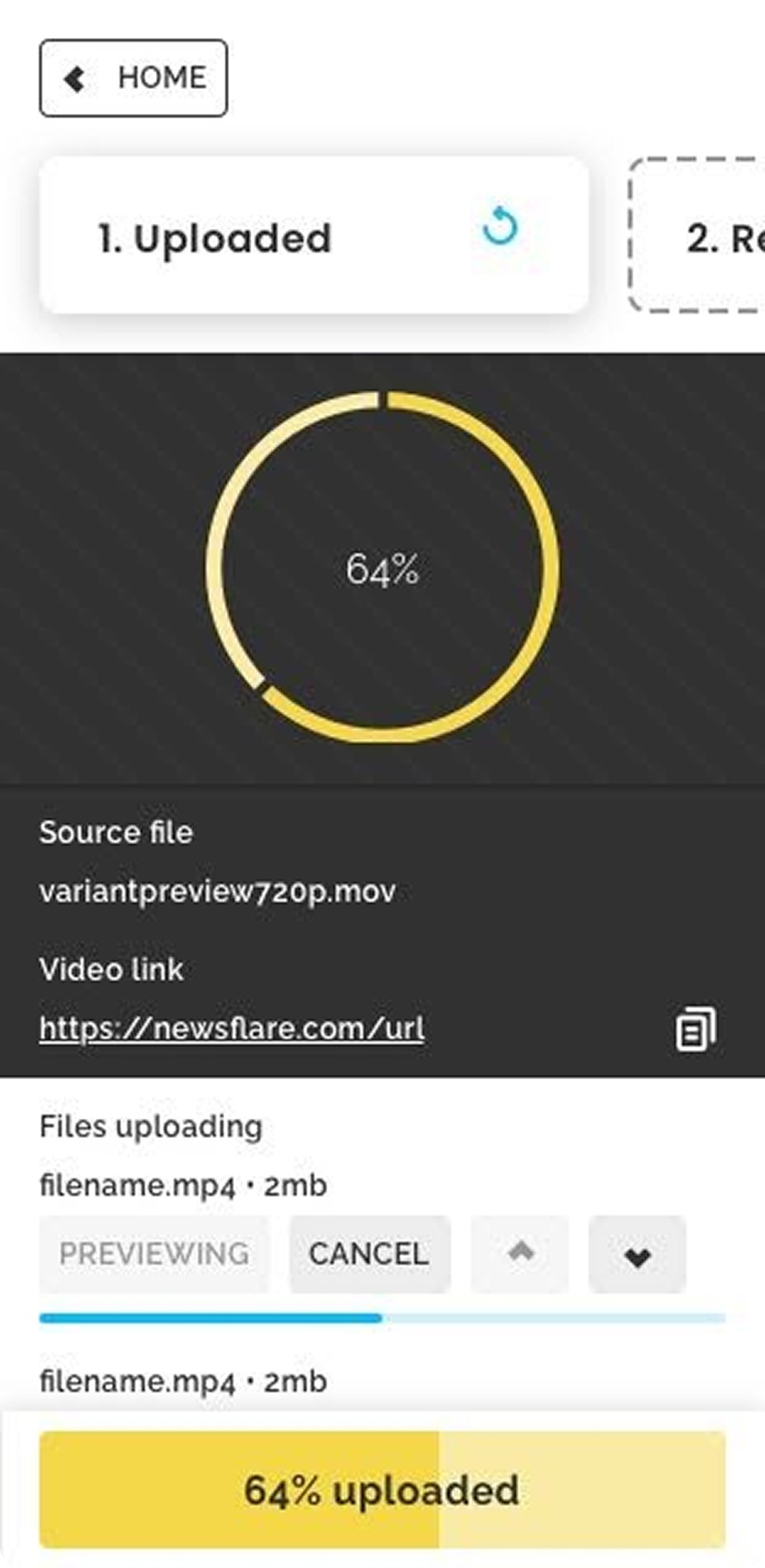

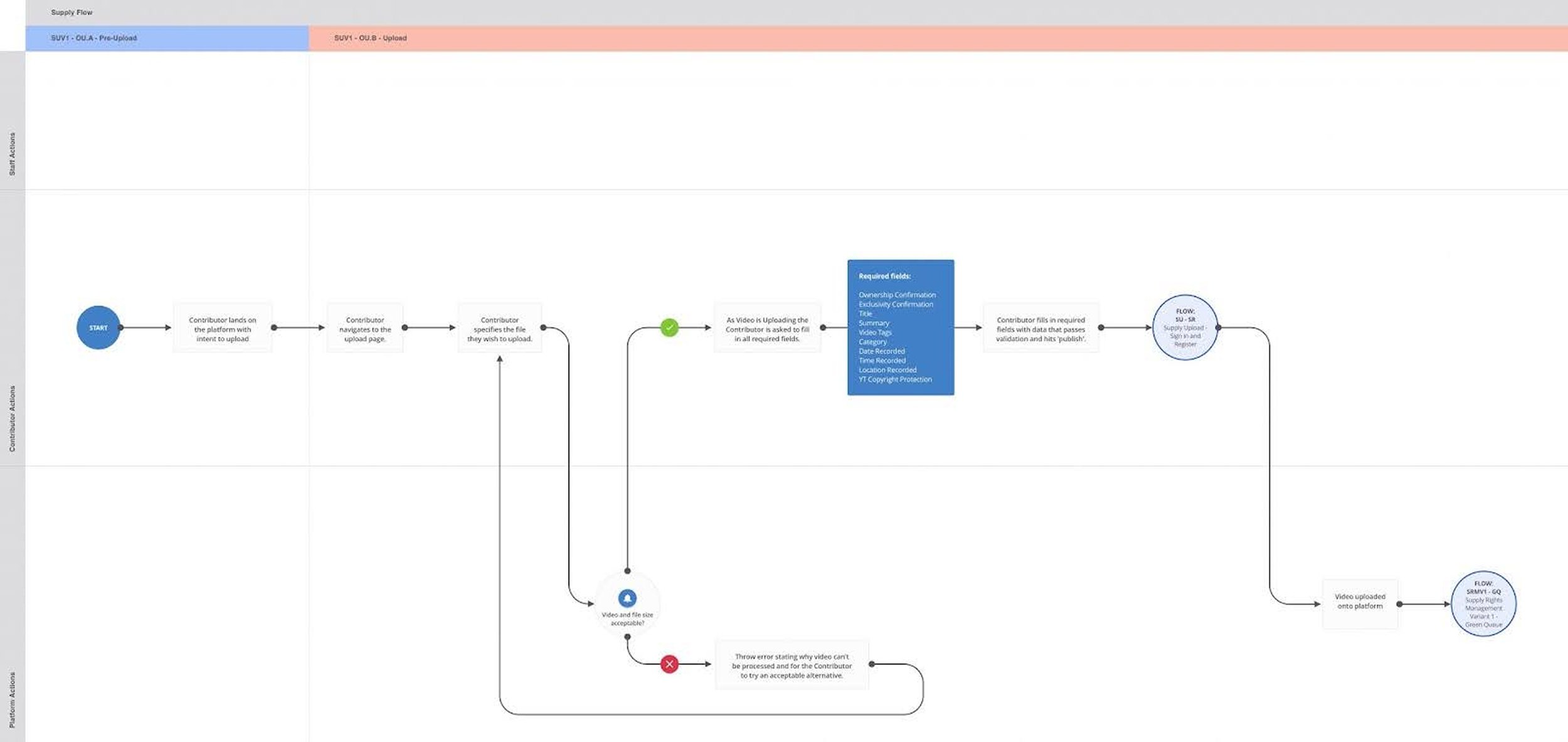
This became the only upload flow the company needed.
Outcomes
Reflections
The MRSS pipeline was the most impactful thing we did, and it emerged entirely from talking to Content Partners in depth rather than assuming their problem was the same as Chasers'. The architecture solution - scraping rather than uploading - wouldn't have been visible without that conversation.
One test we ran prototyped a one-to-many upload model, allowing multiple videos to share a single metadata set. This produced a 7× increase in uploads during testing and pointed to directions worth pursuing: multi-session publishing, agent-based uploads via messaging platforms, and dynamic metadata by location.
The broader lesson: success came from segmentation and a willingness to build distinct architecture for the highest-performing cohorts, rather than treating all users the same. The two solutions - MRSS pipeline and consolidated upload flow - look completely different because the underlying user needs were completely different.